
Rendering emoji
HTML/CSS and template images use Twemoji by default for consistent emoji rendering. URL images use the loaded page’s own emoji handling unless you explicitly enable Twemoji.
How it works
Section titled “How it works”Twemoji replaces emoji text with images in HTML/CSS and template renders by default. URL renders leave the loaded page unchanged unless disable_twemoji is explicitly false.
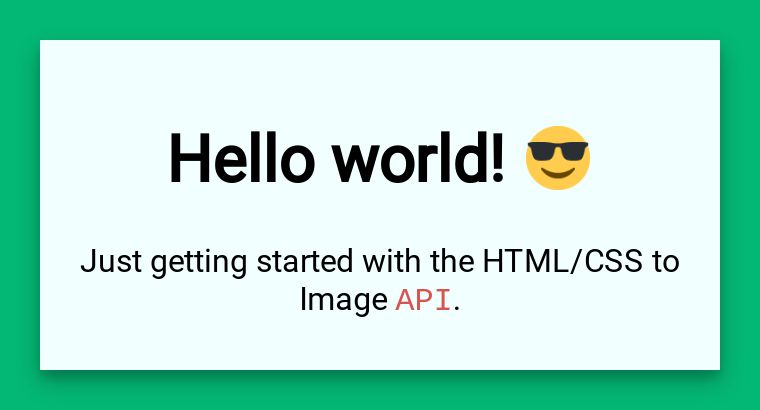
emoji class
Section titled “emoji class”Twemoji replacement images have an emoji class, which you can style.
Here is the default CSS we apply to all emoji. To make tweaks, adjust it and include it in your CSS to override the defaults.
/* Take advantage of the built in 'emoji' class to modify the display of emoji */img.emoji { height: 2em; width: 2em; margin: 0 .05em 0 .1em;}Disabling Twemoji
Section titled “Disabling Twemoji”For HTML/CSS and template images, set disable_twemoji: true to use your supplied fonts or the rendering environment’s native emoji fonts instead of Twemoji. For URL images, omission, null, and true leave the loaded page’s emoji handling unchanged. Set disable_twemoji: false to inject Twemoji into a URL page. true does not disable the website’s own emoji scripts. See the disable_twemoji parameter guide for the full value table.
When to disable Twemoji
Section titled “When to disable Twemoji”- You’re using a custom emoji font
- You prefer the native system (linux) emoji appearance
Example
Section titled “Example”{ "html": "<div>Hello 👋 World 🌍</div>", "disable_twemoji": true}Need help?
Talk to a human. Email support@htmlcsstoimage.com and we’ll help you get started.